
The complete guide
Choosing a Compact Espresso Machine for Your Home
A coffee machine can look small in a photo and still take up more room than you expect. There is the machine itself, then the cup, the coffee grounds and the space you need to work. If your bench already feels busy, choosing a home espresso setup starts with more than its appearance.
The Compact Barista Espresso Machine offers a narrow body with ground-coffee brewing, preset shot buttons and a steam wand. It is designed for home use and keeps you involved in making the drink. That makes it worth considering if you enjoy the process, but less suited to someone who wants every step done for them.
Here is how to judge whether its size, features and daily routine match what you need.
Start with the space you actually have
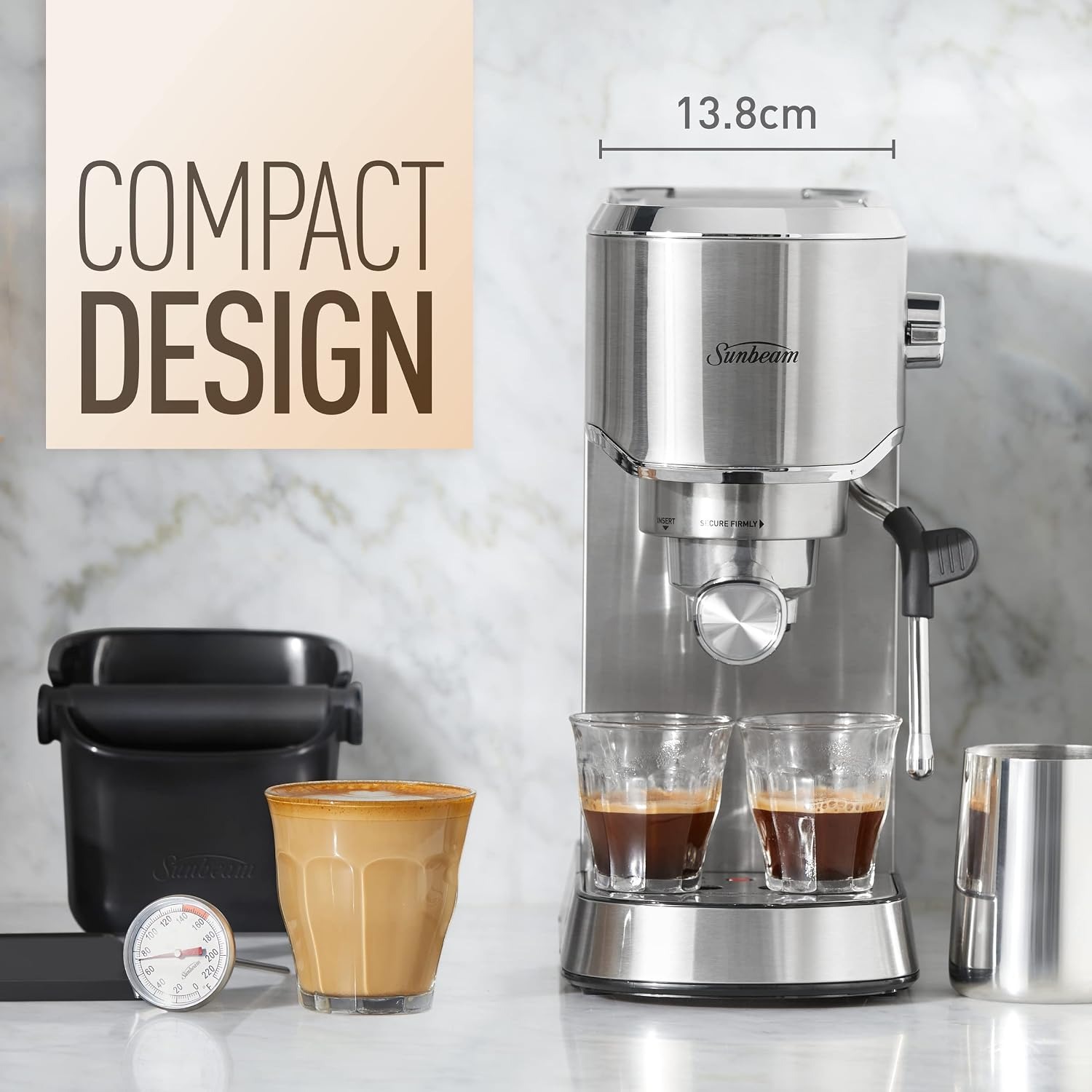
The listed dimensions are 31 cm deep, 13.8 cm wide and 30.5 cm high. The width is the standout measurement, especially if you are comparing a slim coffee machine with wider alternatives.
Still, measure all the space rather than just a gap between appliances. A counter can be wide enough but too shallow for comfortable use. Overhead cupboards may also limit access.
Mark out the machine's footprint on your bench with paper or removable tape. Then place a cup nearby and think through where you would prepare the grounds. If you want milk drinks, leave working room for that too.
The listed dimensions describe the product, not its required operating clearance. Check the manual for safe placement and access requirements. Weight is not given by the maker, so confirm that separately if you expect to move the machine in and out of a cupboard each day.
Understand what manual operation means here
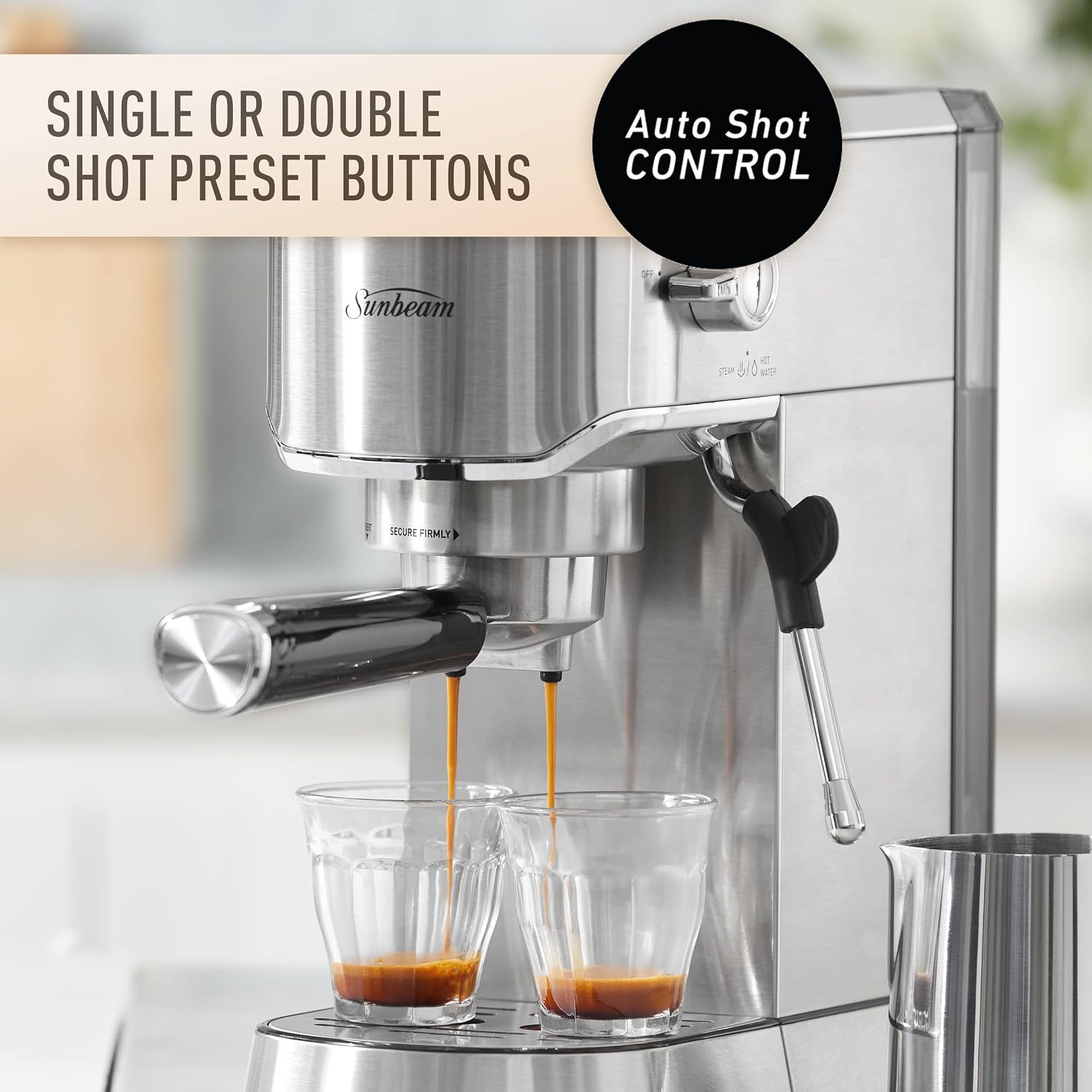
The term manual coffee machine can cover different levels of hands-on work. In this case, the maker lists manual operation alongside preset single and double shot buttons.
Those features are not a contradiction. You prepare the ground coffee, while volumetric control manages the selected pour. It offers help with one part of the process without turning the machine into a fully automatic coffee system.
This distinction matters when comparing products. If you want to press one button and receive a complete milk coffee, a steam-wand machine asks more of you. If you like preparing the coffee yourself, the preset pour may be a useful middle ground.
Exact shot volumes and adjustment options are not stated. Do not assume the presets can be programmed unless the supplied instructions confirm it.
Choose ground coffee with care
This is a ground coffee machine with a reusable filter. A built-in grinder is not specified, so plan around suitable pre-ground coffee or a separate grinder.
The coffee you put in matters. Grind, freshness and the amount used can change how the water passes through the grounds and how the drink tastes. A preset button cannot correct every difference in preparation.
Start with coffee intended for espresso equipment, then follow the machine's instructions for the filter and dose. Avoid guessing basket capacity from the words single and double shot. The maker does not provide basket sizes or recommended coffee weights.
If you are learning, change one part of your preparation at a time. That makes it easier to understand why a cup tastes different. Buying several accessories at once will not necessarily help you learn faster.
What the heating features tell you
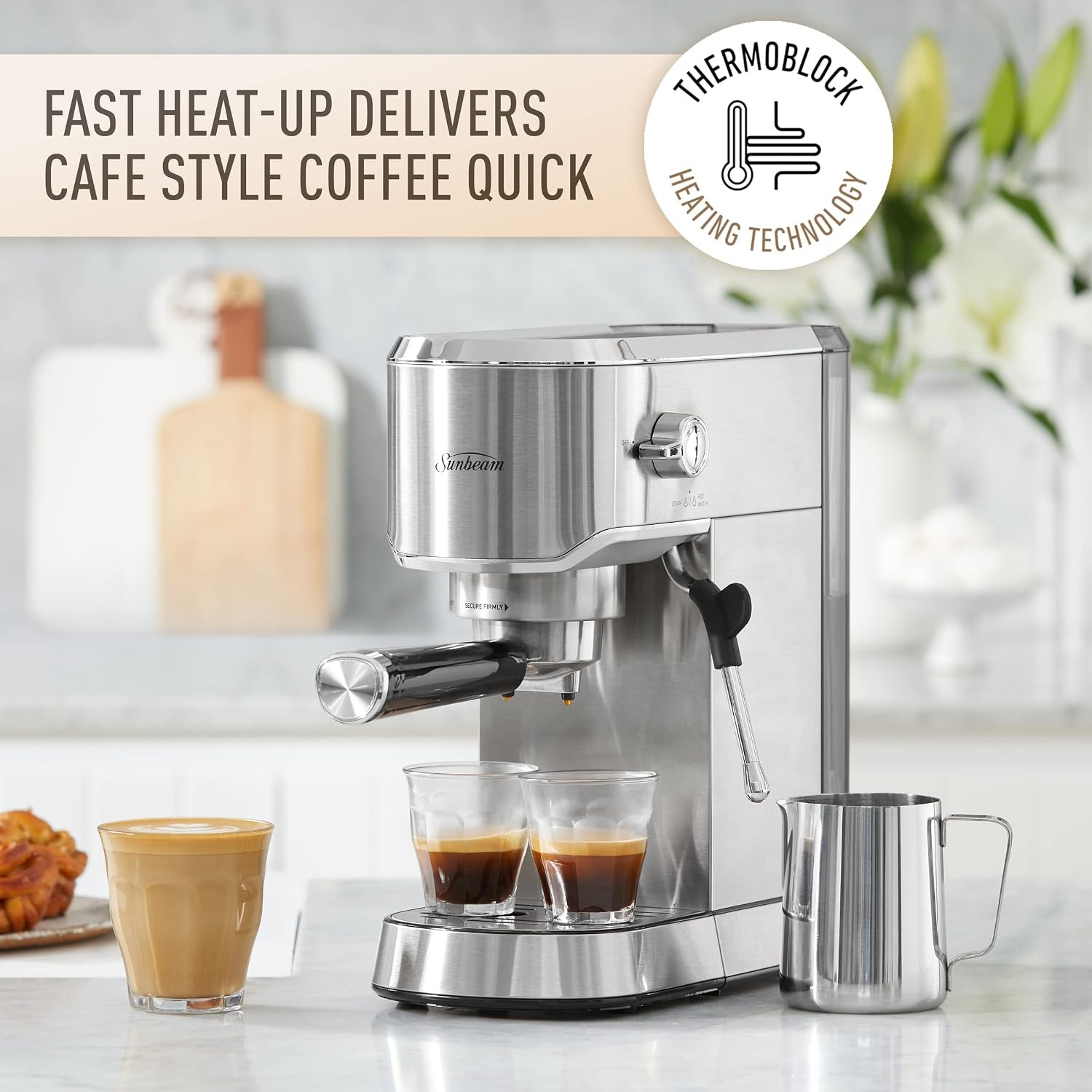
The machine uses thermoblock heating and has a listed power rating of 1450 W. The maker describes the heating as quick, but no measured warm-up time is given.
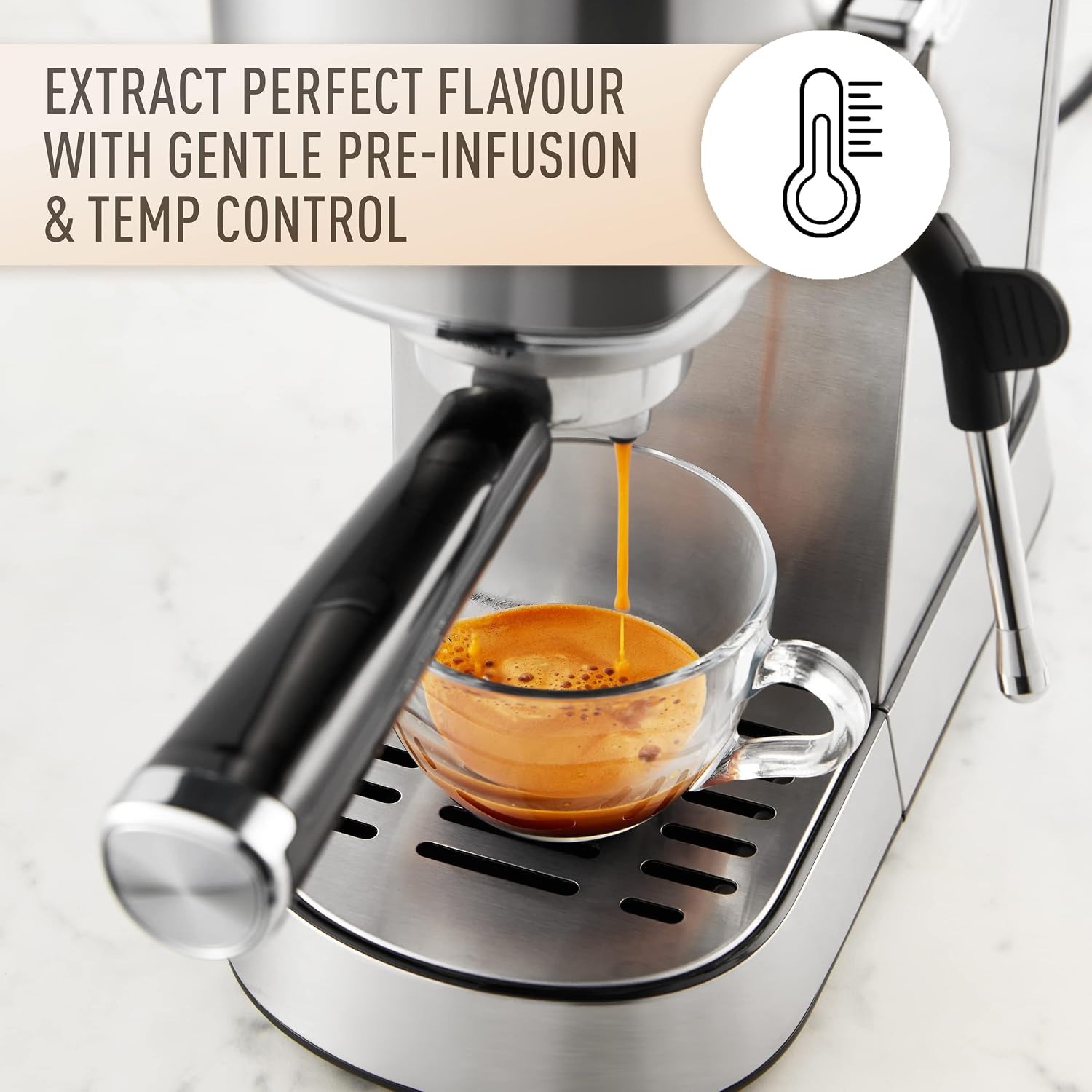
An automatic temperature controller manages temperature for extraction and steam. That is useful information about how the machine works, but it does not establish a specific brewing temperature or a range you can adjust.
When comparing a thermoblock espresso machine, look beyond a promise of fast coffee. Think about the full routine, including preparing grounds, making the shot and cleaning up afterwards.
Electrical compatibility needs its own check. Wattage does not tell you the voltage, frequency or plug supplied. Those details are not in the maker's description, so confirm them for your destination before placing an order.
Pre-infusion and pump pressure in plain language
Pre-infusion wets the coffee before the main extraction. It is part of this machine's listed brewing process.
The machine also has a listed 15-bar pump. That number describes a pump specification, not a promise that every coffee will taste balanced or that extraction always occurs at that pressure.
It is easy to focus on the biggest number when comparing espresso machines. A more useful question is whether the machine fits the way you want to prepare coffee and whether you can repeat a preparation that tastes good to you.
The maker does not state pre-infusion timing or detailed pressure control. Treat these as listed features, rather than assuming the sort of settings found on other models.
Decide how much milk preparation you want
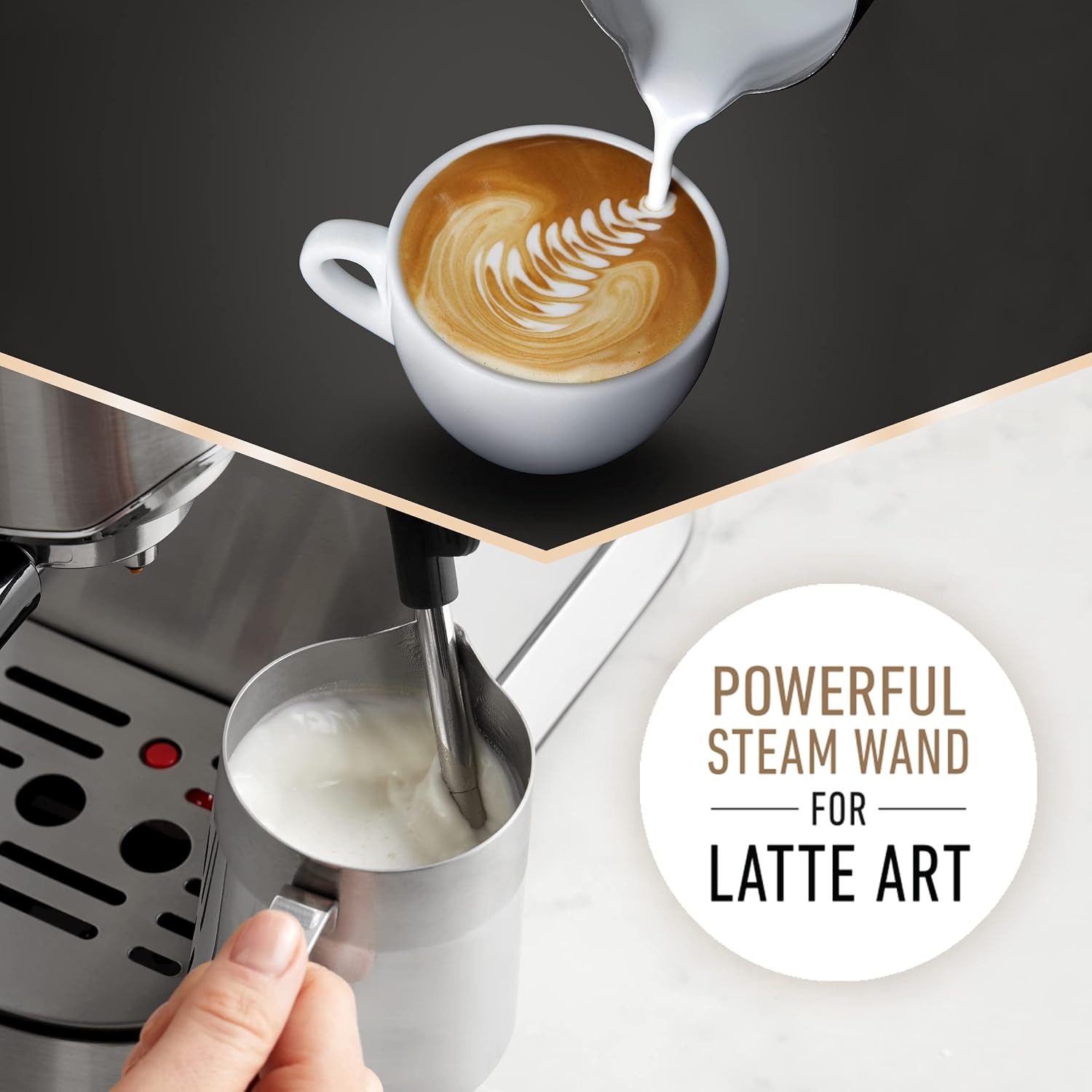
An espresso machine with steam wand gives you a hands-on way to prepare milk. This machine includes that feature, making it relevant to people who enjoy milk-based espresso drinks as well as straight espresso.
A wand is different from an automatic milk system. You take part in the process, and milk texture depends on your technique. Give yourself time to learn rather than expecting a particular result from the first attempt.
The included components name a filter, but not a milk jug. Check what comes in the box before deciding what else to buy. Cup clearance and supported jug sizes are also not specified.
Cleaning matters here. Follow the supplied instructions for cleaning the wand after milk preparation, including any directions about hot surfaces and steam. A milk coffee maker should fit your cleaning habits as well as your drink preferences.
Think about capacity in everyday terms
The listed capacity is 1 L. That gives you a useful comparison point, but it does not translate into a fixed number of drinks.
Your water use will depend on what you make and how you use the machine. A short espresso routine is different from preparing several milk drinks and following any required rinsing steps.
For a household, think about who will make coffee and when. If everyone wants a drink at once, the hands-on process may matter more than the capacity figure.
The machine is recommended for home use. The maker does not give a continuous service rating or describe it as commercial equipment. A compact espresso maker should not be chosen for a busy workplace or café on size and pump pressure alone.
Check materials without making assumptions
The maker specifications list stainless steel material and a silver finish. Those details help describe the machine's appearance, but they do not identify every part inside it.
If you are comparing a stainless steel espresso machine with other options, ask which surfaces or components matter to you. Do not assume that all water-contact parts or removable pieces share the same material.
The reusable filter is another practical detail. It supports a ground-coffee routine without a capsule-only format, but it still needs cleaning. Reusable does not mean maintenance-free.
Brand, country of origin and weight are not specified by the maker. If those are deciding factors, get confirmation rather than filling the gaps from photos or similar-looking models.
Build cleaning into the decision
The right coffee machine is one you are willing to look after. Before buying, picture the end of the routine as clearly as the first sip.
Used grounds need removing, the filter needs attention and milk residue should not be left on the steam wand. Follow the manual for the correct steps and cleaning products.
Before cleaning parts that may be hot, switch off, unplug and allow the machine to cool. Keep the main appliance out of water. Dishwasher suitability is not given by the maker, so check before putting removable parts through a cycle.
Descaling instructions and frequency are also not provided by the maker. Follow the manufacturer's directions and consider local water hardness and how often you use the machine. Avoid borrowing a cleaning schedule from a different model.
Check the order details before buying
Warranty terms and returns conditions are not included by the maker either. Read our delivery and returns pages policies, especially if you are buying a gift or will not be able to inspect the machine soon after delivery.
Confirm the electrical requirements and included contents before adding accessories. A filter is listed, but a grinder, milk jug and other tools are not confirmed.
These checks are less exciting than choosing your first bag of coffee, but they help avoid a machine that arrives without the fit or setup you expected.
The short version
This small espresso machine combines a 13.8 cm-wide body, ground-coffee input, reusable filter, preset shot controls and a steam wand. It suits a buyer looking for a hands-on home coffee routine with some help managing the pour.
Measure your space, confirm electrical compatibility and decide whether manual coffee and milk preparation appeal to you. If those basics fit, you have a sound basis for deciding whether this compact machine belongs on your bench.